Showing posts with label alexandra semyonova. Show all posts

Wednesday, February 4, 2015

Pit Bull Experts: scientifically unimpressive and technologically worthless

In 1960, Louis Leaky sent a secretary with no college education into the Africa bush to study chimpanzees. Despite the objections of "experts" Leaky persevered. Leaky felt that someone with little formal training would be more likely to describe what they were seeing rather than what they thought they should be seeing. 

I think everyone will agree that hiring Jane Goodall for the job was a brilliant move. 

Keep Jane Goodall in mind while you watch this video, The Trouble With Experts, then continue reading.

Pit bull advocates make a lot of noise about their "experts" and tout the perceived consensus among "experts" as proof that "pit bulls" are not the problem, owners are. Here are four of the more impressively credentialed "experts".


PETER L. BORCHELT


The ASPCA cited BORCHELT in their anti-BSL position statement and BORCHELT was called upon to provide his "expert" opinion in favor of pit bulls when a NYC council member sought to ban them:

A Brooklyn-based animal behaviorist who opposes a citywide pit bull ban, Peter Borchelt, said strong dogs such as pit bulls, Rottweilers and German shepherds are generally safe, if they are "raised like pets." You get into trouble when the dog is not trained to be nonaggressive," Mr. Borchelt, who has a doctorate in animal behavior, said. "They can become dangerous when they're thrown behind a fence and allowed to become overly protective. You just have to take a few extra steps to make sure the dog is friendly, affectionate, and well socialized."
PETER L. BORCHELT, PhD and "expert" for hire.

BORCHELT provided the above "expert" opinion about the safety of pit bulls AFTER he was sued for a million dollars for providing his "expert" opinion to a retired fire fighter about the safety of a pit bull that he was in possession of. The pit bull attacked the retired fire fighter. Despite the fact that the pit bull had a known documented history of previous aggression, BORCHELT assured the retired fire fighter the pit bull was safe. During the civil trial, BORCHELT testified under oath that the pit bull was not vicious. Yeah. Just in case you missed the colored text above indicating an external link, click here.

PETER BORCHELT is a member of an elite club known as Certified Applied Animal Behaviorists. According to the civil lawsuit article, he charges $300 an hour to fix your dog's problems. You can find his fee schedule here. BORCHELT'S gun for hire, er uh I mean "expert" witness page is conveniently malfunctioning.


IAN DUNBAR

If I were asked to recommend a dog, say for a children's psychiatric ward, my first choice would be a pit bull. When children pull their tail, if they have one, or poke them, the dog's like... he doesn't care. With a good owner, you have the most fantastic breed of all.  
IAN DUNBAR, DVM, PhD

Poor Ian. Yet another dupe of proof of assertion. Apparently he has yet to receive the memo regarding the official revocation of nanny dog status. 

Hot shot Dunbar does not appear to offer services for problematic or dangerous behaviors. Smart move.


 RICHARD POLSKY

No other breed has been maligned or vilified as much as the pit bull terrier. One commonly finds negative publicity about this breed, despite the fact that many honorable Americans have kept pit bulls as pets, including Franklin Roosevelt and Thomas Edison. 
RICHARD POLSKY, PhD and "expert" for hire.

Poor Richard. All of that money and all those years spent studying to acquire impressive degrees was no guarantee that he would be able to demonstrate critical thinking skills. He still fell prey to the common fallacy known as Proof of Assertion. It is a documented fact that President Roosevelt's "pit bull" was a dangerous menace. It is a documented fact that Edison did not own Nipper and there is no documented proof that Thomas Edison ever owned any pit bull. 

The pit bulldog's long legacy of vilification is well earned and well documented.

POLSKY'S fee schedule is available on demand. I suspect it is one of those cases where if you have to ask, you probably can't afford it.


JAMES HA

DR JAMES HA, animal behaviorist at the University of Washington in Seattle and "expert" for hire.
The reason we're focusing just on pit bulls is that we hear so much about them, and that is not because of the breed difference, the genetic difference - that's because of the way they've been raised.

That quote is from a 2010 KOMO news interview. Compare that to HA'S blog post in 2008, where HA cited research that stated red and golden cocker spaniels were more likely to display aggressive behavior than black cocker spaniels and that yellow labs were "significantly more likely to be reported with aggression problems" than the black or chocolate variants, yet JAMES HA promotes the crazy notion that dogs artificially selected for violence only require a loving gentle family.

Also in the 2010 KOMO interview, DR HA stated that mastiffs, chows, shepherds, rottweillers and dobermans are "all more genetically aggressive than" dogs that had been artificially selected for combat for 200 years. HA goes on to add that genetics is roughly 20-30% responsible for temperament. YET, at the roughly 4:00 minute mark of his presentation on "Behavioral Genetics" DR HA stated that in studies of selected dog breeds, none were gripping breeds btw, for defence behaviors ie, guarding, attacking, biting there is a 14 - 20% heritability rate "which in genetics world is important". He immediately followed up with "there are different genetic predispositions in different breeds." Towards the end of this 2011 youtube video, HA states that 30-50% of behavior is genetics. My head was spinning just trying to keep up with all his facts.

DR JAMES HA is a member of an elite club known as Certified Applied Animal Behaviorists.
HA offers a variety of services ranging from $75 - 250 plus travel fees.


One unspoken assumption among early behavior geneticists, an assumption that was shared by most for many years, was that some psychological traits were likely to be significantly influenced by genetic factors, whereas others were likely to be primarily influenced by shared environmental influences. Most behavior geneticists assumed that social attitudes, for example, were influenced entirely by shared environmental influences, and so social attitudes remained largely unstudied until relatively recently. The evidence now shows how wrong these assumptions were. Nearly every reliably measured psychological phenotype (normal and abnormal) is significantly influenced by genetic factors. Heritabilities also differ far less from trait to trait than anyone initially imagined. Shared environmental influences are often, but not always, of less importance than genetic factors, and often decrease to near zero after adolescence. Genetic influence on psychological traits is ubiquitous, and psychological researchers must incorporate this fact into their research programs else their theories will be ‘‘scientifically unimpressive and technologically worthless,’’ to quote Meehl again.
Genetic Influence on Human Psychological Traits


Genetics, Not Parenting, Key to Temperament, Studies Say, Los Angeles Times, February 20, 1994

Major Personality Study Finds That Traits Are Mostly Inherited, New York Times, December 2, 1986


PETER BORCHELT, IAN DUNBAR, RICHARD POLSKY and JAMES HA believe that purpose bred dogs, artificially selected for violent combat for 200 years are not genetically predisposed to violence. BORCHELT, DUNBAR, POLSKY and HA believe it is equally wrong to think that nature plays second fiddle to nurture in dogs. Unfortunately, they have been able to convince others of their distorted beliefs too.


So much for "experts".


Dr James Ha
http://www.seattlemet.com/news-and-profiles/articles/consider-the-pit-bull-february-2013

http://www.komonews.com/news/local/109770109.html

http://companionanimalsolutions.com/blogs/the-genetics-of-behavior-what-color-is-your-dog/

https://www.youtube.com/watch?v=JMyjS6m1Sq4


Jane Goodall
http://www.janegoodall.ca/goodall-bio-timeline.php

http://www.biography.com/people/jane-goodall-9542363#early-interest-in-primates

http://www.notablebiographies.com/Gi-He/Goodall-Jane.html#ixzz3Bo6e4pHc


The Nanny Dog Myth Revealed

Thomas Edison's pit bull

Famous Pit Bull Owners: The Thomas Alva Edison Edition

Famous Pit Bull Owners: The Presidential Edition

Pete Roosevelt: The Disgraced White House Bandog


Myth 99: Scientists know what they are talking about because they study animals in an objective way, Alexandra Semyonova

The science of how behavior is inherited in aggressive dogs by Alexandra Semyonova

Alexandra Semyonova's book, The 100 Silliest Things People Say About Dogs is available in the right side bar of this blog.


The Trouble with Experts


Only An Expert


Monday, March 3, 2014

The Truth About Pit Bull Owners

Myth 39: The serious to fatal damage the aggressive breeds inflict when they attack isn’t due to their genes, but rather due to having the wrong kind of owners.

We’ve seen that the killing bite and unpredictable, uncontrolled aggression are genetically anchored in these dogs, and that they can’t be taught not to execute killing behaviour. They inevitably reach a certain age when they start to do it, looking for opportunities and excuses to do what we have bred them to do (see Myth 38). If you’re lucky, the first attack will be on your cat or another dog, and not on your child. This killing behaviour is not caused by the owner in individual cases; it’s just part of what the dog is. However, the killing behaviour is caused by certain people’s consumer behaviour. By buying these dogs, these people are responsible for making it economically profitable to breed for the killing bite and the hair trigger. Are these people all “the wrong kind of owners”?
The answer to this question lies in the kind of person who wants a dog with the killing bite in the first place. So who are they?
Well, in fact, they are the wrong kind of owners. Take a look around you. It’s mostly a group of people who – for some reason related to their personal psychology – specifically want a dog whose breed standard explicitly states that the breed has been selected for extreme aggression. Often these are people with an inferiority complex of some kind. They want something that will finally enable them to intimidate other people. They have an ego problem, and need to prove something to the world. Many are men who are (perhaps unconsciously) worried about their masculinity, that maybe the world won’t see it. Others are adolescents who watch too much MTV and learn that an aggressive dog is an essential consumer item, just like the Nikes, if he wants to keep up his macho hip-hop or skater’s image. Sometimes they are naïve people, who think all dogs are cuddly plush toys. None of these people have any idea of behavioural conformation (see Myth 38), of the unity of mind and body Nature gives to all creatures, and they are all, in their own way, consumed by vanity.

Experience (of which this author has a lot, alas) teaches that the owners of aggressive breeds can be divided broadly into three categories.

1) We all know there are people who try to conceal their inner feelings of inadequacy by acting extra tough outwardly. Many of them nowadays go buy a “tough” dog. These people, who are struggling with an inferiority complex or an ego problem, then try to force their pit bull/Am Staff (or Presa, or Dogo, etc.) on you because they feel the world owes them recognition. Many of us have experienced this. You try to avoid these people (and their dog) on the street or in a park, but they follow you, determined to inflict the dog upon you. (After all, what’s the use of having this proof of Manliness around if no one will look at it?) They cross the street to follow you so you can’t avoid a confrontation. Their dog runs up to yours in a park, and they refuse to call it when you ask them to. Usually, the dog wouldn’t obey anyway, and they don’t want this embarrassing fact revealed to you. But above all, they enjoy your worry about what their aggressive dog will do. They shout at you to stop acting so weird about their dog. They get angry, and they often get verbally aggressive. It is of extreme importance to these people to force their dog on you, because their need is so great to show the world they know better than everyone else. The dog is the way they can seek arguments and win for a change, since they never succeed in doing this on their own strength. When their dog does attack another dog and try to kill him, they are dumbfounded, because they really are too stupid to understand what these dogs are all about. Their cowardice surfaces – they don’t dare interfere with their attacking dog, and once it’s over, they disappear as quick as they can. Often you never see them in the park again, which is great, except for the fact that someone’s normal, peace seeking dog had to pay with his life first. But some of them don’t disappear for good. Some of them actually enjoy watching their dog’s aggression, and just make sure they’re gone before the police arrive. Tomorrow they’re back again, and blaming you for having called the police. There have been cases in which the owner of the attacked dog was terrorized as punishment for reporting the attack to the police, to the extent that the owner of the horribly wounded dog had to move to a different neighbourhood. Finally, many of the people in this category of aggressive dog lovers enter their dogs in illegal pit fights, a phenomenon which has resurfaced in many of our cities since these dogs became so widespread. Some of these specifically go to places where other dogs come, in the hope that if their aggressive-breed dog practices on your cocker spaniel, he’ll do better in the pit.

2) These are young adolescent male humans, who have reached the brink of adulthood but aren’t there yet. The adolescent male is searching for his identity and trying to get himself a satisfying spot in his peer group. The adolescent doesn’t always have bad intentions, but his brain isn’t ripe yet, and he isn’t yet capable of understanding the consequences of his actions (which is also the reason he has to pay so much more for car insurance than the rest of us). He sees the macho rapper on television, accompanied by the aggressive dog, and he wants one, too. After he’s finished saving up for Nikes, he saves up for a dog. He has no idea what he’s bought once he has the dog, thinking it’s just another consumer item. To him the dog isn’t any different than his other fashion accessories, to him the dog is a thing that will – just like his Portable Play Station – turn on and off if you press the button. The adolescent is, by virtue of his age, a bit rebellious. He is exploring various boundaries, sometimes pushing the envelope in his search for an identity. He just loves to show adults that he won’t do what they ask him to do, but that he makes his own decisions. Of course he won’t leash his dog just because some grown-up makes the request, are you kidding, what a loss of face! He isn’t prepared for it when his dog attacks a person or another dog, and he doesn’t know what to do. His toy is suddenly acting up. So he does nothing, offers no help, doesn’t dare interfere with his dog, and most probably just gets the hell out of Dodge as quick as his little adolescent legs will carry him. Adolescence is an age of natural egotism, and a time when even sympathetic boys often lose their ability to empathize with others for a while. So this kid isn’t capable of imagining the suffering the attacked dog goes through, nor the grief of the dog’s owner. He’s just glad his parents didn’t find out about what happened, otherwise they might take his dog away. “Tomorrow’s another day, hey, don’t be so serious about life, and besides, what could I do about it? The dog did it, not me.”

3) These are the Egotistical Innocents. They are members of animal protection clubs and humane societies. They read lots of sentimental stories about animals, and they watch lots of programs on Discovery Channel. They believe that all animals are sweet-natured cuddly toys. These people’s egocentricity is different from the adolescent’s. These people think they are the measure of all things, and they therefore believe that if a dog is nice to them, well, it means he’s nice, period. How the dog behaves towards others isn’t so important. The Egotistical Innocent lives in a fairy tale, failing to see that a dog is a living being with a will and personality of his own, and that the dog hasn’t been informed of the fairy tale. The Innocent is reinforced in the fairy tale by breeders who agree that the stories about these dogs are all lies, after all, look how sweet he is to the prospective buyer. The Innocent doesn’t understand what “fierce protector of home and hearth, averse to strangers” means, doesn’t know a secret language has been developed since these breeds started causing so much tragedy. She likes the idea of proving to all the world that even these dogs fit her fairy tale, and that they are the poor victims of vicious anti-animal propaganda. The Egotistical Innocent is delighted with her puppy and sees him as a sort of four-legged human baby. She doesn’t see that the pup is playing in an abnormally aggressive way at the age of eight weeks already. She is dumbfounded on the day when her “puppy,” who meantime is actually a young dog, suddenly, out of the blue (because the warning phase has been bred out of these dogs), launches an unbridled attack on another dog and seriously wounds or kills the other dog. She is stricken and disillusioned – not only about the suffering of the attacked dog, but also because her fairy tale has caved in. But not to worry. It only takes her a few days to restore her view of the world. She decides her dog is as sweet as she’d thought after all. After thinking awhile, she realizes the whole thing was the other dog’s fault. After all, the other dog growled at her sweetie, so what else could her sweetie do but defend himself? Sometimes the Egotistical Innocent will cry out that German shepherds bite too, or that even a dachshund can be dangerous under the right circumstances. Unfortunately, there is always a way for people who don’t want to face realities. The great tragedy is that the Egotistical Innocent’s dog will harm or kill many other dogs, because she continues to take him to dog parks, in the belief that it’s up to the other dogs to make sure they don’t get killed.

Fact: This Myth is true in the sense that these dogs always have the wrong owners, people who shouldn’t have a dog in the first place. However, this Myth is false because it’s the genetics of the dog that make him a killer, regardless of what kind of owner he has. In other words, these dogs aren’t killers because they have the wrong owners, rather they attract the wrong owners because they are killers.

Brown, S-E, The human-animal bond and self-psychology: Toward a new understanding, Society & Animals, electronic version, Vol. 12, No. 1, 2003.
Burrows, TJ, Fielding, WJ, Views of college students on pit bull “ownership”: New Providend, The Bahamas, Society & Animals, Vol. 13, No. 2, 139-152, 2005.
Frommer, SS, Arluke, A, Loving them to death: blame-displacing strategies of animal shelter workers and surrenderers, Society & Animals, Volume 7, Number 1, 1999.
Peremans, K, Functional brain imaging of the dog; single photon emission tomography as a research and clinical tool for the investigation of canine brain physiology and pathophysiology, Universiteit Gent, Faculty of Veterinary Medicine, Gent, 2002. http://www.uznuclear.ugent.be/research/phd_dissertations/Functional_Brain_LowRes.pdf
Oral history collected from dog owners in The Hague, 1994-2009.

From: Semyonova, A, The 100 Silliest Things People Say About Dogs, The Hastings Press, England, 2009, pages 125 – 127. (Check side bar for purchasing options)

Recommended reading to enhance your understanding of this serious problem:

On pit bulls and their owner. Kenneth Phillips, 17 Barks, September 5, 2013

Personality and Behavioral Characteristics of Owners of Vicious Breeds of Dog. Kenneth Phillips, dogbitelaw.com

Vicious dogs: the antisocial behaviors and psychological characteristics of owners.  Ragatz L1, Fremouw W, Thomas T, McCoy K., Journal of Forensic Sciences. 2009 May; 54(3):699-703.


Ownership of high-risk ("vicious") dogs as a marker for deviant behaviors: implications for risk assessment. Barnes JE1, Boat BW, Putnam FW, Dates HF, Mahlman AR. Journal of Interpersonal Violence. 2006 Dec; 21(12):1616-34.

Psychological Characteristics Owners of High Risk for Aggression Dog Breeds. Stanley Coren. Psychology Today,

Do Owners and Their Dogs Have Similar Personalities? Stanley Coren. Psychology Today,

What an Aggressive Dog Says About its Owner. Jeanna Bryner, LiveScience, May 24, 2012

Owners of Aggressive Dog Breeds Are More Hostile. Stephanie Pappas, LiveScience, August 09, 2012


Thursday, May 30, 2013

Unleashed: The Phenomena of Status Dogs and Weapon Dogs


Book Review
From ANIMAL PEOPLE,  May/June 2013:

Unleashed:  The Phenomena of Status Dogs and Weapon Dogs 
by Simon Harding
The Policy Press,  U. of Bristol (c/o U. of Chicago Press, 
427 East 60th St.,  Chicago,  IL 60637),  2012.  
286 pages,  hardcover.  $100.60;  Kindle $23.72.

    I first saw an American Staffordshire,  better known as a pit bull,  during a 1989 visit to Baltimore.  Three youths had stolen a cocker spaniel and were encouraging their three unleashed pit bulls to tear the spaniel apart alive.  The spaniel tried desperately to escape,  but was held on a short leash.  By the time I reached the scene,  the spaniel had collapsed,  possibly dead.  The youths kept kicking the remains,  and the AmStaffs kept attacking.  By the time the cops caught up with them,  they had disposed of the evidence.  They laughed in the cops’ faces: “Man, you’ll never find that dead dog, and anyway we’re juvies––you can’t touch us.”
    The attacking dogs’ behavior was so utterly abnormal,  so utterly unlike how I’d ever seen any dog behave, that I told various friends about it.  “Oh,”  they all said, “those were pit bulls.  It’s what they do.  They are not like other dogs.’
    The recorded history of the pit bull began in the Middle Ages.  Hundreds of years of selective breeding eventually produced dogs aggressive enough for use in baiting bears and bulls.  This mayhem had its heyday during the reigns of Henry VIII and his daughter Elizabeth I.  After public opinion turned against both the torture of humans and the torture of animals as entertaining,  Britain in 1835 abolished bull-and bear-baiting.  Breeders and gamblers then turned to pitting “bull” dogs against each other.  No longer did they need to obtain bulls or bears,  or maintain fighting pits big enough to hold a terrified bear. 
    Fighting dogs were soon introduced around the world by the soldiers and sailors of the British Empire.
    Simon Harding,  author of Unleashed: The Phenomena of Status Dogs & Weapon Dogs,  worked in youth justice for 25 years.  He recently received a doctorate from the University of Bedfordshire.  He now presents himself as an expert on dog behavior.
    Even in 1989,  when I discovered the existence of pit bulls,  I found a wealth of information about their history and behavior in one afternoon at my local public library.  Vastly more has been published since.  Yet Harding opens by alleging that the problem of “weapon and status dogs” is newly emergent,  little documented by academic literature and primary data.
    There is no lack of relevant academic literature and primary data;  Harding just consistently ignores most of it.  For example, Harding somehow never found the unmatched statistical feat accomplished by ANIMAL PEOPLE editor Merritt Clifton, tracking fatal and disfiguring dog attacks by breed for more than thirty years.  (The fatality data has been retrospectively confirmed,  case by case,  by DogsBite.org founder Colleen Lynn.)
    Harding does not consult the many pediatric medicine and surgical journals that discuss the relative seriousness of the wounds that pit bulls inflict.  He skips the data showing that pit bull bans not only dramatically decrease catastrophic dog attacks and shelter admissions,  but also coincide with reductions in gang crime of as much as 40%.  Since Harding ignores the work of Charles Darwin on natural and artificial selection,  it is no surprise that the work of geneticists and veterinary neurologists does not interest him either.
    Instead, Harding leans for his history of the bull breeds almost exclusively on the work of longtime pit bull advocates Karen Delise,  a vet tech,  and Diane Jessup,  a pit bull breeder.  Even there Harding is selective,  missing the publications in which Jessup acknowledges––or rather boasts––that the fighting and gripping behaviors of pit bulls are genetically determined,  and that it is a flaw in a pit bull if these traits are missing.  Harding instead simply states––with only Delise’s word for it––that pit bulls are like any other dog;  that they were never fighting dogs,  and rather were always and are still working farm dogs;  that they were peaceful family pets until some time in the 20th century when back yard breeders took over;  that only bad owners and poor breeding make them a problem now;  that there has never been trouble with any purebred pit bull;  that German shepherds bite the most;  that pit bulls merely suffer from a media-created image problem.  On page 110 Harding repeats the “nanny dog” myth,  which has recently been rejected even by the pit bull advocacy group BADRAP.
    Harding seems equally ignorant of the history of his own country,  claiming that breeding dogs for fighting purposes is new.  I find myself wondering whether he has ever heard of Henry VIII,  Elizabeth I,  or Shakespeare,  whose Globe theater in London competed for audience share with the nearby Paris Gardens bear-baiting pits favored by Elizabeth.
    Harding even ignores his own data.  Of 138 dangerous dog owners he approached, 76% of the interviews were not completed.  43% subjects refused to be interviewed;  8% asked for money.  Harding departed early from 5% of his attempted interviews,  fearing for his personal safety.  20% of the interviews were disrupted when the dangerous dog misbehaved. Only 33 interviews were successfully completed.
    Harding’s interview subjects consistently acknowledged keeping pit bulls as weapons.  They agreed that crossing a pit bull with something else,  usually a mastiff,  produces a bigger but equally aggressive dog.  They use the dogs to show their masculinity as they define it––as a resource of violence,  intimidation and aggression,  and as backup for controlling and oppressive behaviors in their dealings with women,  authority and their own peer group.
    Harding admits that ordinary people are using public space differently because of the presence of dangerous dogs.  He cites statistics showing a year-upon-year doubling of British hospital admissions due to dog attacks since 2004,  paralleling the rise in “weapon dogs” seized by police.
    Without questioning why most unemployed ethnic youth do not become involved in gang activity and with “weapon dogs,”  Harding tags those who keep these dogs as innocent social victims.  Worse,  he paints them,  despite their predatory behavior toward working class people,  as representatives of the working class.  He argues that what the public really fears is a new set of social values developing,  which we should learn to accept as a part of normal social change,  rather than rejecting these poor gang youths by rejecting their dogs.
    Towards the end of Unleashed,  Harding reveals that his goal from the start was to support the repeal of breed bans.  Bully breeds are weapons,  Harding admits, but rather than banning them we should allow everyone to have one.  We should educate criminal youths about how to be kind to animals,  and improve the image of pit bulls so we won’t be afraid any more,  and so that sociopathic youths won’t mistakenly think these dogs are dangerous.
    Meanwhile,  Harding agrees there should be restrictions on ownership of bully breeds,  but only until we have educated these criminal youths.  After that,  everyone will be safe with pit bulls at all times,  as long as they are of pure breeding.
    As George Orwell wrote:  “One has to belong to the intelligentsia to believe things like that: no ordinary man could be such a fool.”                              
––Alexandra Semyonova

    [Alexandra Semyonova,  a dog behaviorist and former Dutch SPCA inspector,   is author of The 100 Silliest Things People Say About Dogs (Hastings Press,  2009.)]

Monday, October 31, 2011

Proof it is not just the owner

The naive, desperate-to-belong, young Junior Nutters have been out in force, claiming it's not the breed, its the owner.


Below is a video that shows just how wrong these naive young things are, but first here's a description of how these genetically determined, breed-specific behaviors work.

Read here how Viszla's get high on chromosomes and then express their joy by performing a man-made, genetically determined, unnatural behavior.


This is a man-made exaggeration of one portion of a wild predator's hunting sequence that is really quite bizarre when removed from the context of the specific man-made job of bird hunting.(p. 71 Semyonova) It has been noted elsewhere that it would not be unheard of for a pointing breed owner to walk in on his pointer frozen stiff in front of a feathered hat. Here are other weird things pointers have pointed.

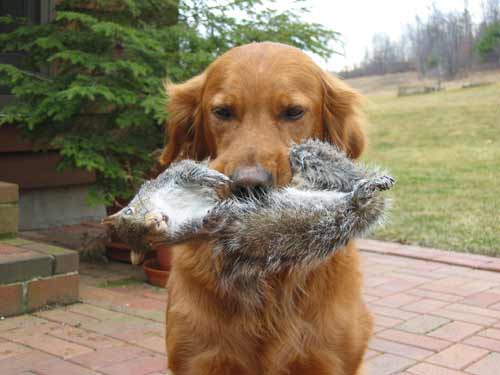
Retrievers also have been bred to have a bizarre, genetically determined behavior that was developed by exaggerating another segment of the wild predator's hunting sequence. If, as an irresponsible owner of a retrieving breed dog, you let your retriever get out of your yard, you might be presented with this:

This behavior is guided by the dog's man-made, genetically determined love for looking for dead things to carry gently and bring back to a beloved two-legger.

When you look at the following video, you will first note that owner is a moron who's dressed himself to look like a female baboon in heat presenting to a male. But, that's somewhat beside the point.


Obviously, he's a highly incompetent and irresponsible pit bull owner who just let his dog attack unprovoked, and is completely unable to stop the attack.

But, watching this video also makes it clear that it's not just the owner. The pit bull's behavior is extremely bizarre and unique to gripping dogs. The pit bull is completely oblivious to what's going on around it. It is in its own little world. It is high on chromosomes.


Yes BR, Dawn is serious:


My wish for baboon draws owner before baboon draws owner drops the leash one day and someone really gets hurt:


Thanks to Branwyne for finding this video!

Tuesday, April 12, 2011

The Experts

Cowardice asks the question, "Is it safe?" Expediency asks the question, "Is it politic?" And Vanity asks the question, "Is it popular?" But Conscience asks the question "Is it right?" And there comes a time when one must take a position that is neither safe, nor politic, nor popular, but he must do it because Conscience tells him it is right.MARTIN LUTHER KING


Behaviorists/veterinarians

RANDALL LOCKWOOD, PhD

HUGH WIRTH, veterinarian


NICHOLAS DODMAN, BVMS, ACVB, ACVA

on the MA muzzling law
After a spate of attacks by pit bulls this summer, Massachusetts lawmakers passed legislation requiring the dogs to be muzzled in public. Some pit bull owners protested, but a Tufts expert says the law may be a good idea. Breeds like pit bulls and Rottweilers, says animal behavior expert Nick Dodman, are hardwired for aggression.

“Some of these dogs are as dangerous as a loaded handgun,” Dodman– director of the Animal Behavior Clinic at TuftsSchool of Veterinary Medicine – said in an interview with The Boston Globe Magazine.

Genetics play a big role.

“No doubt about it, pit bulls are genetically predisposed toward aggression,” he told the magazine. “Justas certain breeds of dogs were bred to herd, certain were bred to hunt, certain to point, and others to swim.”

While most pet owners accept that their dogs have certain genetic behavioral characteristics, there is still resistance to the idea that some dogs are more dangerous than others.

“Everybody accepts [genetic behaviors like herding or hunting] until you throw in the word ‘aggression’ and things like a full, crushing bite, which some breeds were specifically bred for in the past.”

Statistics on dog attacks reinforce the link between certain dogs and dangerous behavior.

“It’s like a scene from “Casablanca” when they say, ‘Roundup the usual suspects,’” Dodman told the Globe.“It’s always German shepherds, chow, husky, pit bull.The numbers do the talking.”

He added that pit bulls and Rottweilers alone account for more than 50 percent of the fatal dog attacks every year. Despite the danger, the owners of these dogs often fail to take proper precautions.

“A lot of owners of aggressive breeds are suffering from denial and ignorance, because no one wants to be fingered as having that kind of dog,” Dodman said.


“Genetics does play a role and people who think it doesn’t are kidding themselves,” says Dodman. “The pit bull is notorious for a very hard bite. They are always No. 1 in the lethal dog bite parade. The dog was bred for pit fighting. It was bred to never give up, to bite and hang on.”


KATHERINE HOUPT, VMD, PhD, DACVB


BONNIE V. BEAVER, BS, DVM, MS, DACVB, Professor and Chief of Medicine, Department of Small Animal Medicine and Surgery, College of Veterinary Medicine, Texas A&M University
Executive Director, American College of Veterinary Behaviorists


The AVMA warns veterinarians to be careful about supplying behavioural evaluations of dogs for insurance purposes.

"It's risky for veterinarians," said Dr. Beaver, explaining that there are many situations in which a dog may behave aggressively, and temperament tests can't rule out the possibility of aggression. "You don't have temperament tests that can identify all possibilities."


BENJAMIN HART, professor emeritus at the UC Davis School of Veterinary Medicine and animal behaviorist
"It's quite common for a pit bull to show no signs of aggression. People will call it a nice dog, a sweet dog, even the neighbors - and then all of a sudden something triggers the dog, and it attacks a human in a characteristic way of biting and hanging on until a lot of damage is done."
"It's very poor policy to allow any child around a pit bull, in my mind, let alone climb on a dog."


KATHRYN HAWKINS, DVM
After seeing another dog die from a pit bull attack, I feel compelled to write. The opinion that pit bulls are "mean because of the way they are raised" is often not the case. A Both of the dogs I took care of that died were attacked unprovoked by pit bulls that were in families that raised them responsibly. Just as a retriever is bred to hunt birds -- an instinct you can't stop -- many pit bulls have a genetic tendency to attack other animals. When they do, they are extremely powerful and don't quit. I have never been bitten or growled at by a pit bull -- they are very friendly. But when the instinct to attack another animal occurs, they cause serious damage, or death. They don't bite people any more often than other breeds but when they do, it's bad. The aggressiveness toward other animals and damage they do is not because of "the way they are raised" -- it is usually due to a genetic instinct not in the control of the owner.


ARTHUR HERM, veterinarian, animal control
He said he disagrees with those people who believe they can train aggressiveness out of dogs, and added he believes aggressiveness is “inherent” and “genetic” in all dogs while pit bulls “seem to have more of that.”


MICHAEL W. FOX, veterinarian, animal behaviorist


SHERYL BLAIR, Tufts Veterinary School symposium - Animal Aggression: Dog Bites and the Pit Bull Terrier
The injuries these dogs inflict are more serious than other breeds because they go for the deep musculature and don't release; they hold and shake.
GARY WILKES, animal behaviorist
No other breed in America is currently bred for fighting, in such great numbers as the American Pit Bull Terrier. No other breed has instinctive behaviors that are so consistently catastrophic when they occur, regardless of how rarely they happen. The reality is that every English Pointer has the ability to point a bird. Every Cattle Dog has the ability to bite the heel of a cow and every Beagle has the ability to make an obnoxious bugling noise when it scents a rabbit or sees a cat walking on the back fence. Realistically, if your English Pointer suddenly and unpredictably points at a bird in the park, nobody cares. If my Heeler nips your ankle, I’m going to take care of your injuries and probably be fined for the incident. If your Beagle bugles too much, you’ll get a ticket for a noise violation. If your Pit Bull does what it’s bred to do...well, you fill in the blank.


ALEXANDRA SEMYONOVA, animal behaviorist


JOHN FAUL, animal behaviorist


Surgeons
DAVID A. BILLMIRE, MD, professor and director of the Division of Craniofacial and Pediatric Plastic Surgery at Cincinnati Children's Hospital Medical Center "As one who, for the last 30 years, has been on the receiving end of the dog-bite injuries that pass through the Children's Hospital Emergency Room, as well as on the staff at the Shriners Hospitals for Children where we see the late effects of these injuries from across the nation, I can categorically tell you that the problems associated with dog bites are indeed breed-specific." "Starting about 25 years ago, my colleagues and I started to see disturbingly different types of injuries. Instead of a warning bite, we saw wounds where the flesh was torn from the victim. There were multiple bite wounds covering many different anatomical sites. The attacks were generally unprovoked, persistent and often involved more than one dog. In every instance the dog involved was a pit bull or a pit bull mix." "...[H]ow many mauled children do we have to see before we realize the folly of allowing these dogs to exist?" "There are plenty of breeds available that peacefully coexist with human society. There is no need for pit bulls."


MARK WULKAN, MD, surgeon at Children's Healthcare of Atlanta
"There is a difference with the pit bulls. In the last two years we've seen 56 dog injuries that were so severe the patient had to be admitted to the hospital so this doesn't count just a little bite and then goes to the emergency room. Of those 56, 21 were pit bulls. And then when we look at our date even further, of the kids that were most severely injured, those that were in the hospital for more than 8 days or had life threatening injuries, 100% of those were pit bulls."


JOHN BINI, MD, chief of surgery at Wilford Hall Medical Center


MORTALITY, MAULING, AND MAIMING BY VICIOUS DOGS, April 2011 Annals of Surgery


DAVID E. BLOCKER, BS, MD, Dog Bite Rates and Biting Dog Breeds in Texas, 1995-1997


PETER ANTEVY, pediatric E.R. physician, Joe DiMaggio Children's Hospital
Dr Antvey sees at least five dog-bite victims a month in his emergency room. Unfortunately, he said, "the biggest offender is the pit bull."


MELISSA ARCA, MD
The reality is that any dog can bite, and statistically speaking, a child is most likely to be bitten by the family dog or a dog that they know. When you're talking about bite severity resulting in life-threatening and even fatal injuries, pit bulls and Rottweilers are the main culprits.

Experience absolutely colors our perception, and in this case I can't help but be affected by what I've seen. I will never forget a young child I treated in the ER during my pediatric residency. She suffered severe facial lacerations and tears to her face after a pit bull attack in her local park.


HORSWELL BB, CHAHINE CJ, oral surgeons
Dog bites of the facial region are increasing in children according to the Center for Disease Control. To evaluate the epidemiology of such injuries in our medical provider region, we undertook a retrospective review of those children treated for facial, head and neck dog bite wounds at a level 1 trauma center. Most dog bites occurred in or near the home by an animal known to the child/family. Most injuries were soft tissue related, however more severe bites and injuries were observed in attacks from the pit-bull and Rottweiler breeds. Younger (under five years) children sustained more of the injuries requiring medical treatment. Injury Severity Scales were determined as well as victim and payer mix demographics, type and characteristics of injury, and complications from the attack.


Dr RICHARD SATTIN, chief of unintentional-injuries section of the Centers of Disease Control
We're trying to focus public attention on this greatly underestimated public hazard.

In 1979, pit bulls accounted for 20 percent of fatal attacks by dogs. That figure had risen to 62 percent by 1988.


Nobody knows the dog population of the United States or the exact breakdown by breed.
We do not believe that pit bulls represent anywhere near 42% percent of dogs in the United States. Therefor, we believe that the pit bull excess in deaths is real and growing.


ROBERT D. NEWMAN, M.D.
As a pediatrician I was disturbed to read Vicki Hearne's assertion that there are no bad breeds, just bad dogs (Op-Ed, April 15). There is ample evidence to suggest that certain breeds of dogs are more dangerous to children than others.
From 1979 to 1994, there were 177 known dog-bite-related fatalities in the United States. Of these fatalities, 66 percent were caused by five breeds: pit bull, Rottweiler, shepherd, husky and malamute. If you include crosses among these five breeds, that number rises to 82 percent. Other breeds, like Labrador retrievers and golden retrievers were not implicated in a single fatality during this same period.
I laud the American Kennel Club's attempt to include information about dog breeds considered ''not good with children'' in the coming edition of ''The Complete Dog Book,'' and lament the fact that the book is being recalled at the request of some breeders.
Seattle, April 16, 1998


Dr. EDGAR JOGANIK (after trying to reattach scalp and ear to a pit bull victim)
Pit bull attacks are typically the most severe, and in about one-third of all attacks, the animals are family pets or belong to close friends.
That should be the message, that these dogs should not be around children, adults are just as likely to be victims.
Everyone should be extremely cautious.


DR. MICHAEL FEALY
When a Pit Bull is involved the bites are worse. When they bite, they bite and lock and they don't let go... they bite lock and they rip and they don't let go.


DR. CHRISTOPHER DEMAS
Bites from pit bulls inflict much more damage, multiple deep bites and ripping of flesh and are unlike any other domestic animal I've encountered. Their bites are devastating - close to what a wildcat or shark would do.


DR. AMY WANDEL, plastic surgeon
I see just as many dog bites from dogs that are not pit bulls as bites from pit bulls. The big difference is pit bulls are known to grab onto something and keep holding so their damage they create is worse than other breeds.


ANDREW FENTON, M.D.
As a practicing emergency physician, I have witnessed countless dog bites. Invariably, the most vicious and brutal attacks I have seen have been from the pit bull breed. Many of the victims have been children. In a recent study from the Children's Hospital of Philadelphia, pit bull attacks accounted for more ER visits than all other breeds combined.

In young children, the most common part of the body injured was the face. Numerous studies have proven that the number-one cause of dog bite fatalities is the pit bull breed. I am certain that many attacks are due to owner negligence, but the fact remains that many were unpredictable and were perpetrated by formerly "loving and loyal" pets.

Dr. Chagnon has every right to leave our town as she claims she will if pit bulls are banned, just like every one of her patients has the right not to attend her clinic where she brings her pit bulls. I applaud Mayor Pro Tem Joanne Sanders for bringing this issue to the forefront. In the interest of public safety, I recommend we enforce a spay/neuter requirement on pit bulls while reviewing and revamping all of our policies relating to animal bites.


DR. PATRICK BYRNE, Johns Hopkins Hospital
I can't think of a single injury of this nature that was incurred by any other species other than a pit bull or a rottweiler.


JUGPAL S. ARNEJA, MD, FRCSC, KARA PAPPAS, B.S., WILLIAM HUETTNER, M.D., ARLENE A. ROZZELLE, M.D., GURBALBIR SINGH, M.D., FRCSC
A ten-year, two-institution review of pediatric dog attacks: Advocating for a nationwide prohibition of dangerous dogs
PURPOSE:
Affectionately referred to as ‘man’s best friend’, dog attacks in the pediatric population often test this analogy. Pediatric dog attacks are a significant public health issue that negatively affects the psychological well-being of a child. We performed analysis of our cumulative two-institution pediatric dog attack data, present representative cases and offer evidence to support a nationwide prohibition of dangerous dogs.
METHODS:
A retrospective review was performed at two urban Children’s hospitals from 1996-2005 of all dog attacks presenting to the plastic surgery service. Charts were reviewed with analysis of patient demographics, injury site, operative intervention, and dog-specific data.
RESULTS:
109 patients were included for review, with 83% of attacks occurring in the facial region. Mean age was 3.9 years (range 2-18 years). 67% of attacks involved multiple anatomic sites, 95% required surgical intervention with 30% requiring a skin graft or flap reconstruction. 88% of dogs were known to the victim, 46% of attacks were provoked, 73% of dogs were euthanized and 57% of dogs were deemed to be of a dangerous breed (Pit Bill or Rottweiler). Mean hospital duration was 4.7 days and 27% required additional reconstructive plastic surgery. Figures below illustrate a representative case of a 4-year old female attacked by her aunt's dog, resulting in a complete nasal amputation, preoperatively (upper), at time of forehead flap reconstruction (middle), and five years post-operatively (lower), with an acceptable functional and aesthetic reconstruction.
CONCLUSION:
Dog attacks in the pediatric population produce significant costs including physical morbidity, psychological disability, and financial strains. A majority of attacks were by a known dog, in the facial region, by dogs which we define as of a dangerous breed. Much of the injury patterns are unique to children and these injuries and associated costs can be significantly diminished, as the problem is often preventable. Our cases present the ‘tip of the iceberg’ as our cases only represented consultations directed to Plastic Surgery. The Province of Ontario, Canada has banned Pit Bulls since 2004, as have several American cities. We describe the scope of the problem, preventative guidelines, and outline why organizational advocacy in plastic surgery should be directed towards a national prohibition of dangerous dogs.


M. A. DEWAN, EDWARD J. WLADIS, Ophthalmic Plastic Surgery, Lions Eye Institute, Department of Ophthalmology, Albany Medical College, Slingerlands, NY
Periorbital trauma from pit bull terrier attacks.
PURPOSE
To report the nature of periorbital trauma after pit bull attacks. While these attacks have been well-characterized in the popular media, no case series has documented the ophthalmic manifestations of this trauma.
METHODS
We retrospectively reviewed all cases of pit bull terrier attacks that presented to the oculoplastic and orbital surgery service at Albany Medical Center between 2008 and 2011. The age, gender, extent of the injuries, care provided, follow up interval, and complication rate were evaluated for each patient.
RESULTS
Seven patients were identified, with a mean age of 17.2 years. Six of the seven patients were in the pediatric age group. All patients suffered eyelid lacerations, and only one patient had additional injuries. Four patients (57.2%) suffered a canalicular laceration. Despite the lack of post-operative oral antibiotic use, no patient developed a wound infection.
CONCLUSIONS
In the ophthalmic setting, pit bull terrier attacks most frequently involve children and result in eyelid lacerations. Canalicular injuries are common after these attacks.


ALAN BECK, Sc.D


MERRITT CLIFTON, journalist, Animal People editor
There are very few people, if any, who have written more on behalf of dogs over the past 40-odd years than I have, or spent more time down the back alleys of the developing world observing dogs in the habitats in which normal dogs came to co-evolve with humans. But appreciation of the ecological roles of street dogs & coyotes, exposing dog-eating and puppy mills, opposition to indiscriminate lethal animal control, introduction of high-volume low-cost spay/neuter and anti-rabies vaccination, introduction of online adoption promotion, encouraging the formation of thousands of new humane societies worldwide, etc., are not to be confused with pit bull advocacy. Pit bull advocacy is not defending dogs; it is defending the serial killers of the dog world, who kill, injure, and give bad reputations to all the rest. Indeed, pit bull advocacy, because it erodes public trust in dogs and people who care about dogs, stands a good chance of superseding rabies as the single greatest threat to the health, well-being, and human appreciation of all dogs worldwide.


STANLEY COREN, PhD
"A dog's breed tells us a lot about that dog's genetic heritage and makeup. Genetics is a strong determinant of personality. In the absence of any other information, we can make a reasonable prediction about how the dog will behave based upon its breed." p 84

"When we crossbreed, we lose some of that predictability, since which genes will be passed on by each parent and how they will combine is a matter of chance. Fortunately, there is some data to suggest that we can still make predispositions without knowing much about its parentage. John Paul Scott and John L Fuller carried out a series of selective breeding experiments at the Jackson Laboratories in Bar Harbor, Maine. By happy chance, their results revealed a simple rule that seems to work. Their general conclusion was that a mixed breed dog is most likely to act like the breed that it most looks like." p 77

Dog trainers/animal control

TARYN BLYTH, Dog Trainer
  1. No one is saying that a lot of Pit Bulls can’t be “successfully” socialised with other dogs. Many socialised from puppyhood are very friendly and outgoing with other dogs. The problem arises if and when fighting behaviour is triggered. Even if the Pit Bull does not start the fight, getting into conflict with another animal will often trigger their “grab, shake and kill” response.
  2. “Normal” dogs engage in “ritualised” forms of aggression when they come into conflict. This involves lots of noise, but no real damage. However, when Pit Bulls fight they engage the shake-bite/kill-bite part of the predatory sequence with often fatal or near fatal results. There is seldom time to intervene to rescue the other dog before serious damage is done.
  3. When Pit Bulls engage in a fight, far from this inducing an aversive state of mind (most dogs are in a defensive, survival mode during fights), opioids and dopamine are released in their brains making them feel really good - this feeling is so pleasurable that they will often seek out this behaviour again. In the same way that a border collie is built to feel really good when herding sheep, Pit Bulls are built to feel really good when fighting.
  4. Due to the opioid release during fights, Pit Bulls do not feel pain and so fight on regardless of injury - trying to stop a fight is incredibly difficult.
  5. When “normal” dogs fight, they usually respond to appeasement behaviour from their “opponent” i.e. as fighting is not designed to kill, but to resolve conflict without serious harm, one dog may “give in” and display behaviour which will cause the other dog to back off. Pit Bulls do not respond to appeasement behaviour during fights as this would have been counterproductive in the fighting pits and has been bred out of them.
  6. In my experience Pit Bulls have a very low reactivity threshold - this means that stimuli at low intensities which would be ignored by other dogs are often triggers for aggressive behaviour in the breed. They also have very high arousal levels - they become physiologically aroused very quickly and to extreme levels.
One of the huge problems is actually the fact that the breed is extremely friendly and when well-socialised they are usually quite tolerant and very sweet. What people don’t realise is that the danger does not lie in the fearful, defensive under-socialised Pit Bull (as is so often the case with other breeds), it lies in the dog who will be triggered not into defensive behaviour, but into a predatory/fighting behaviour which is enjoyable and carried out in a happy state of mind - therefore a happy, outgoing dog is in this case no guarantee that one will not have a problem. In fact, due to the sociable nature of the dogs and apparent easy-going temperament, Pit Bulls are often put into situations which they are not equipped to handle - this is how so many tragedies occur.

TRISH KING, Director, Behavior & Training Dept. Marin Humane Society

The fourth undesirable characteristic - arousal or excitement - is actually the most problematic. Many bully dogs cannot seem to calm themselves down once they get excited. And once they get excited all their behaviors are exacerbated. Thus, if a dog is over-confident and has a tendency to body slam or mount, he or she will really crash into the other dog or person when he's aroused, sometimes inadvertently causing injury. He may begin to play-bite, and then bite harder and harder and harder. When you try to stop the behavior, the dog often becomes even more "aggressive." In this way, play can turn into aggression fairly quickly. Research on the brain has shown that excited play has exactly the same chemistry as extreme anger. This allows a play behavior to switch quickly into aggression. And, once the dog has become aggressive a few times, the switch is much easier.


DIANE JESSUP, pit bull expert, breeder, former ACO
"Jessup, the animal control officer in Olympia, uses two pit bulls to train police and animal control officers on surviving dogs attacks.
Unlike dogs who are nippers and rippers, her pit bulls are typically "grippers" who bite down and hang onto their victims."


Jessup believes that much of dog behavior comes from their genes. “I truly believe that a dog is about 90% genetics,” says Jessup.
on protection sports
This difference in “sheepdog versus bulldog” mentality in a trainer is best understood when training the "out!” or release command. It is common practice for those training shepherds and sheepdog types to use force such as hard leash corrections or electric shock to get the dog to release the sleeve. Sadly, I had one young man come to me because a club trainer was slugging his little Am Staff bitch in the nose, till she bled, trying to get her to release the sleeve. She would not! And of course she would not! She was a good little bulldog, hanging on for dear life, just as her bull and bear baiting ancestors of old did. She was a super little gripping dog, who took the pain she experienced as just “part of the job” once her owner set her upon the sleeve. And this is the response from well bred pit bulldogs—to ignore pain while gripping. It is, after all, what they are bred for! Give me a bulldog like her, rather than one which will allow itself to be yanked off the sleeve due to pain.


MICHAEL BURNS, Los Angeles Animal Control Lt.
You have a dog that has aggressive tendencies enhanced through constant and incestuous breeding. If there are some recessive genes on the aggressive or psychotic side, they will make themselves manifest.

They are different. There's an absence of the normal sounds a dog makes when it attacks. It's almost a workmanlike way they hold on in an attack. It's a persistence I haven't seen in any other breed.


KURT LAPHAM, a field investigator for the West Coast Regional office of the Humane Society
Most breeds do not multiple-bite. A pit bull attack is like a shark attack: He keeps coming back.


DAVID GENDREGSKE, Clare County MI Animal Control Director
“In my opinion they appeal to the most irresponsible pet owners and to younger people,” he said. “The younger people have no jobs to support the animal, or they have to move where animals aren’t allowed and (the dogs) end up here.” Certain people like pit bulls because they are intimidating, he said. “They want to scare people. It’s an intimidation thing. They’re number one with those being incarcerated. If there’s a dog left behind (when someone is sentenced to jail or prison), it’s always a pit bull,” he said. He cited the time a pit bull got out of a car and attacked a horse. He was pulled off, but he went back and grabbed the throat. He was pulled off again and again and went back after different parts of the horse. “What kind of a dog but a pit bull would do that?” he asked. “All dogs can bite but not with that ferocity. “ Some people will say that how a pit bull acts and reacts is dependent upon how the dog is raised, he said. “But he was raised to kill for centuries,” he said. “You can’t breed it out in one generation.” If the popularity of pit bulls is a fad, it’s a long term one, he said. “I keep seeing more and more pit bulls,” he said. “It’s getting worse.” Pit bulls, he said, are not good as a working dog, except for perhaps wild boar hunting. “And they’re not one of the smarter breeds,” he said, despite other’s beliefs that they are intelligent.


KEVIN COUTTS, Head Dog Ranger, Rotura, New Zealand
There was concern among dog authorities about American pitbulls being allowed into New Zealand as they were dangerous, unpredictable animals, Mr Coutts said.

"A lot of people in this town get them because they are a staunch dog and they will fight. They are perceived as vicious ... It's frustrating they were ever allowed in the country ... we can't go back now though," Mr Coutts said.


COUTTS' comment on a pit car mauling
This sort of thing happens when people own this breed of dog and then don't look after them.


GARRETT RUSSO, dog trainer
I estimate Medical & Veterinary bills related to injuries caused by pit bulls in the Tompkins Square dog run in 2011, $140,000.00. Estimated Medical (human) & Veterinary (canine) bills from all other breeds and mixed breeds combined during the same period, $5,000.00. (Estimate gathered from reports to by owners to the dog park association.)


VICTORIA STILWELL, celebrity dog trainer
Presas are not to be fooled with, they're dangerous. You've got a fighting breed here. You've got a dog that was bred for fighting. You've got one of the most difficult breeds to handle.


CESAR MILAN, celebrity dog trainer
"Yeah, but this is a different breed...the power that comes behind bull dog, pit bull, presa canario, the fighting breed - They have an extra boost, they can go into a zone, they don't feel the pain anymore. He is using the bulldog in him, which is way too powerful, so we have to 'make him dog' (I guess as in a "regular" dog) so we can actually create the limits. So if you are trying to create submission in a fighting breed, it's not going to happen. They would rather die than surrender.". If you add pain, it only infuriates them..to them pain is that adrenaline rush, they are looking forward to that, they are addicted to it... That's why they are such great fighters." Cesar goes on to say..."Especially with fighting breeds, you're going to have these explosions over and over because there's no limits in their brain."


STEVE DUNO, dog trainer, pit bull owner
"The dogs that participated in these attacks weren't Pekingese. You don't have herds of Pekingese roaming the city attacking people. When someone says all breeds are created equal, well then they're denying the definition of what a breed is. Breed serves a particular purpose."

"I like them. They're eager. They're athletic. They're aesthetically pleasing. But even if they're bred perfectly, they can be problematic, particularly with other dogs."

"When you combine the breed specific behaviors ... with owners who either don't give a rip, or with owners who (have) too much dog, you have a problem."


JEAN DONALDSON, dog trainer


ARLENE STERLING, Newaygo County, MI Chief Animal Control Officer


JIM CROSBY, pit bull hired gun


Insurance industry

PILAR WAGNAR, Allstate spokeswoman, Clearwater, FL


Lawyers/Judges

THOMAS J. MOYER, Chief Justice, Ohio Supreme Court 1987-2010
"The trial court cited the substantial evidence supporting its conclusion that pit bulls, compared to other breeds, cause a disproportionate amount of danger to people. The chief dog warden of Lucas County testified that: (1) when pit bulls attack, they are more likely to inflict severe damage to their victim than other breeds of dogs; (2) pit bulls have killed more Ohioans than any other breed of dog; (3) Toledo police officers fire their weapons in the line of duty at pit bulls more often than they fire weapons at people and all other breeds of dogs combined; (4) pit bulls are frequently shot during drug raids because pit bulls are encountered more frequently in drug raids than any other dog breed.... The evidence presented in the trial court supports the conclusion that pit bulls pose a serious danger to the safety of citizens. The state and the city have a legitimate interest in protecting citizens from the danger posed by this breed of domestic dogs."


WILLIAM M HOEVELER, US DISTRICT JUDGE, ADOA v Dade County, Florida
Despite plaintiffs' contention that there is no such animal as a pit bull, plaintiffs' own experts have written articles about their pedigreed dogs referring to them by the common nickname of pit bull. At trial, these experts identified photographs of dogs as pit bulls, rather than delineating the dogs into any one of the three breeds recognized by the kennel clubs. Moreover, veterinarians commonly identify dogs as pit bulls -- rather than one of the three recognized breeds -- by their physical characteristics. Two veterinarians, testifying for the defendants, stated that they are often called upon to identify a dog's breed because it is an integral part of the animal's health record. This they do by reference to standard physical characteristics. Generally, these veterinarians testified, owners themselves know what breed their dog is.

There was ample testimony that most people know what breed their dogs are. Although the plaintiffs and their experts claim that the ordinance does not give them enough guidance to enable owners to determine whether their dogs fall within its scope, the evidence established that the plaintiffs themselves often use the term "pit bull" as a shorthand method of referring to their dogs. Numerous magazine and newspaper articles, including articles in dog fancier magazines, refer to pit bull dogs. Veterinarians typically refer to the three recognized breeds and mixed breeds with conforming characteristics as pit bulls. In addition, the veterinarians who testified stated that most of their clients know the breeds of their dogs.


DON BAUERMEISTER, Council Bluffs, IA prosecutor


BOB JOHNSTONE, Cincinnati, OH city attorney


KORY NELSON, Denver, CO City Attorney
The most significant point about the justification for bans or restrictions of pit bulls is that these are not dependent upon a claim that every pit bull has a higher than average propensity for attacking humans. The justification is based on the clear evidence that, as a group, pit bulls, compared to other breeds, generally have a higher propensity to exhibit unique behavioral traits during an attack. These behaviors havea higher likelihood of causing more severe injuries or death. The Colorado Dog Fanciers trial court made this clear, stating that, while it could not be proven that pit bulls bite more than other dogs, there was “credible evidence that Pit Bull dog attacks are more severe and more likely to result in fatalities.” The court, in great detail, noted fourteen separate areas of differences, including: strength, manageability and temperament, unpredictability of aggression, tenacity, pain tolerance and manner of attack.

A municipality that is experiencing a problem with pit bull attacks needs to consider for itself the best course of action to protect its citizens, especially those most likely to be unable to defend themselves from the tenacious and sustained attack of a pit bull, who will likely bite, hold, and tear at its victim despite efforts to stop it. However, given the clear rational evidence, breed-specific legislation is still a legally viable option.There is no new evidence that undermines the holdings of Colorado Dog Fanciers, only new relevant evidence that adds additional support for BSL, as the differential treatment of pit bulls is based upon logical, rational evidence from the scientific field of ethology.


KENNETH PHILLIPS, Attorney for dog bite victims dogbitelaw.com
In 2013, there have been 18 canine homicides of which 17 were committed by pit bulls or pit bull mixes. Our dogs are not killing us. Pit bulls are killing us. And although pit bulls attack and kill strangers like Claudia Gallardo, 38 (killed by a pit bull in the front yard of its owner's house in Stockton, California) and Pamela Devitt, 63 (killed by 4 pit bulls running at large as she took a walk in Antelope Valley, California), the usual victims are our children, parents and guests.

I have come to believe that the modern pit bull should not be thought of as a dog at all. A dog is man’s best friend, but this is an animal that will kill the man, his wife, his children, his parents and the guests in his home. Clearly this is not man’s best friend; clearly it is not a “dog” in the sense that we think of a dog. Charles Manson was anatomically a man, sociologically a neighbor, and legally a citizen, but he is spending his life behind bars because he was a deranged individual who orchestrated mayhem and murder. Just because pit bulls look like dogs, they do not have to be thought of like we think about dogs such as golden retrievers and Yorkshire terriers.

In almost all homicides carried out by pit bulls, the owners and neighbors express shock and disbelief because the animal never gave a sign that it wanted to kill anyone. But to me, this is like a drunk driver expressing shock and disbelief that his car could kill. In both types of cases, a person made a choice to do something incredibly reckless, either by getting drunk or by getting the animal that makes headlines because of the frequency and brutality of its killing. We need to stop people from doing these reckless things.

Lawmakers have to stop listening to the nonsense about breed specific laws which is spouted by the owners of bully dogs like pit bulls. Since 2006 there have been 3 psychological studies which focused on the personality and behavioral traits of the owners of pit bulls and other high-risk breeds of dog. A study published in the Journal of Interpersonal Violence showed a link between ownership of high-risk dog breeds and deviant behaviors, crimes against children and domestic violence. Another study concluded that "vicious dog ownership may be a simple marker of broader social deviance." A third study established that the owners of high-risk breeds of dog displayed more antisocial thinking styles, have an arrest history significantly higher than owners of other dogs, and engage in fighting to a significantly greater degree than other dog owners. They also had higher levels of overall criminal thinking patterns to go with the actual criminal behavior. These people, who are fixated on the animals that kill, maim and terrorize, are not the people that a lawmaker needs in his camp. Reasonable people want fair laws that provide a solution to the obvious problems caused by pit bulls.


Pit Bull breeders, owners, fanciers, experts

DIANE JESSUP, Washington pit bull owner and expert


JOHN ROCKHOLT, South Carolina dogman


MARK PAULHUS, HSUS southeast regional coordinator


KATE RINDY, co-author Pit Bulls Are Different, former HSUS employee and assistant to Randall Lockwood, former executive director of Santa Fe Animal Shelter & Humane Society


PEGGY E. WARFLE, Manager Wake Society to Prevent Cruelty to Animal Shelters, Raleigh, NC.


DAVID PREMACK, PhD


this list will be continually updated